
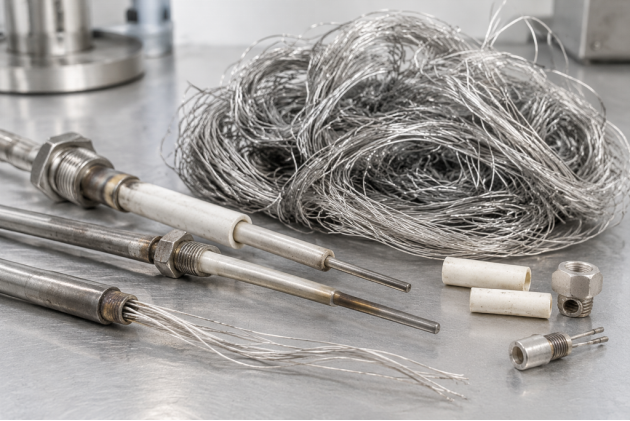
If you have retired furnace probes, loose platinum wire, or a mixed thermocouple lot, we can begin with the source and alloy marking. Type R, Type S, and Type B assemblies often look alike after service, while the recoverable platinum and rhodium may be concentrated in only one part of the assembly. We review the equipment setting, grade information, visible construction, wear, separation, photos, and net weight to develop an initial identification. With this information, our recovery team can review the platinum wire scrap and determine how the lot should move into Platinum Recycling.
What Platinum Wire and Thermocouple Scrap Usually Comes From
The clearest way to narrow down a platinum wire question is to understand the process that produced the scrap. A wire removed from a glass furnace has a different service history from one used in a laboratory reference probe, even when both contain a platinum-rhodium alloy. The source gives us clues about operating temperature, service time, atmosphere, and contamination.
Common sources include glass and fiberglass furnaces, ceramic and refractory kilns, heat-treatment lines, chemical process equipment, laboratory calibration systems, and high-temperature manufacturing tools. The material often appears as a thin silver-white wire or a pair of wires inside a ceramic insulator. The assembly may also include a metal sheath, ceramic protection tube, connector, extension cable, or probe head. These attached parts add to the lot weight, while their recoverable content differs from the wire itself.
For furnace and kiln lots, we compare the service history with the material information in platinum-rhodium thermocouple wire sources.
A useful source description gives us five details: the equipment, the process temperature range, the sensor location, the reason for removal, and whether the lot contains one grade or a mixture from a cleanout. “Used in a furnace” gives us a starting point. “Removed from a glass-melting furnace after temperature readings began to drift; the probes were replaced together, and the extension cables remain attached” gives you and the buyer a much clearer path to identification.
How to Identify Type R, S, and B Wire
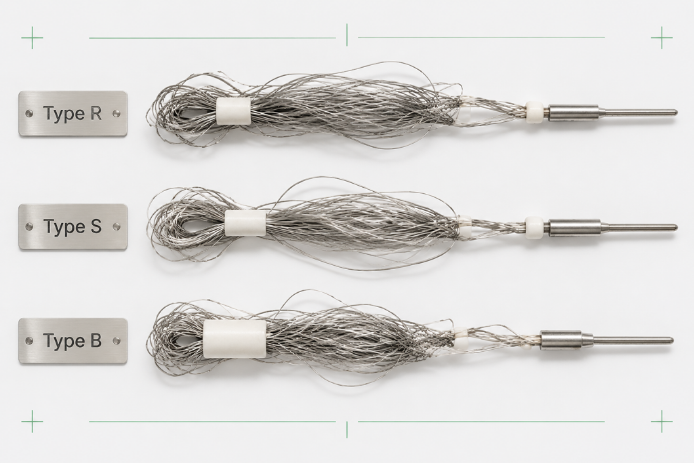
Type R, Type S, and Type B are common platinum-rhodium thermocouple families. Their value comes from the platinum group metals in the thermoelements, and each type uses a different alloy combination. Markings and records often tell us more than appearance alone. A stamped probe, purchase record, calibration label, or equipment drawing can help identify the wire. The thermocouple type guide provides a useful comparison of thermocouple types and conductor combinations.
Type R has a nominal composition of Pt-13%Rh for the positive thermoelement and pure platinum for the negative thermoelement. It is widely used for high-temperature industrial and laboratory measurements. Type S has a nominal composition of Pt-10%Rh for the positive thermoelement and pure platinum for the negative thermoelement. After service, Type R and Type S wire can look almost identical. Type B uses platinum-rhodium alloys on both legs, with a nominal composition of Pt-30%Rh for the positive thermoelement and Pt-6%Rh for the negative thermoelement. Its construction and operating range often indicate very high-temperature furnace service. Extension and compensating cable may resemble thermocouple wire in a mixed bundle. It carries the signal through the system and usually has different recoverable content. * Ceramic insulators, metal sheaths, connectors, and probe bodies add to the assembly weight. They usually contain little or no recoverable platinum.
We use color as one clue rather than proof of grade. Heat tint, oxidation, surface deposits, stretched wire, and repeated cleaning can all change the appearance. When markings are unclear, we compare the source, construction, equipment type, available records, and a representative test result. If your probe came from a controlled calibration or reference environment, NIST thermocouple calibration information can help us understand its service history. A calibration record adds useful context, while our scrap-lot review identifies the recoverable material in the assembly.
How Working Environment and Wear Change the Assessment
The service history helps us understand how the material may have changed and which parts of the assembly need to be separated for identification.
Contamination and Physical Wear
A clean, straight thermoelement removed during planned maintenance is easier to review than a short, fused wire from a furnace cleanout. Each operating environment leaves its own clues. Glass contact may leave surface deposits, while ceramic production can add dust or glaze residue. Chemical service may produce corrosion or process films. Repeated thermal cycling can also leave the wire brittle, kinked, or thin in certain areas.
Separating Recoverable Wire from Attachments
Our review considers three points: the alloy likely installed, the recoverable part of the assembly, and the amount of clean, identifiable material left after removing attachments and debris. Even with a clear source history, a mixed lot may require careful sorting when several probe types were removed together.
The following is a workflow example. A furnace-maintenance lot may arrive with probes still attached to ceramic protection tubes. The tubes can provide useful information about the equipment and service temperature, but their weight must be distinguished from the platinum wire content. In this example workflow, the construction is documented, similar probes are grouped, obvious non-PGM attachments are removed, and the recovery review is based on the clean wire portion.
Reading Each Lot in Its Service Context
A laboratory lot has a different service history. Short wire sections may arrive with calibration labels, reference temperatures, or cut ends that show the original construction. Our PGM scrap recycling guide explains how the material source, physical form, and recoverable content fit together. For these small lots, accurate weighing and careful grouping become especially important. We keep the records with the wire so the technical details remain connected to the material when it is repacked.
A chemical-process lot may carry residue or a surface film that hides the wire’s original finish. Our industry and case archive provides broader context for documenting the plant setting and material condition. When you describe a thermocouple lot, these details give us a clearer view from the beginning. We can then review cleaning, sampling, and separation with the recovery team while accounting for the effect of surface contamination.
How Weighing and Lot Preparation Affect Platinum Recycling
Weight matters, but the most useful figure is the net weight of the identifiable recoverable material. For a clearer assessment, keep platinum-rhodium thermoelements and loose platinum wire in separate groups from extension cable, ceramic parts, metal sheaths, connectors, and furnace debris. Clean groups give us a more accurate view of each material. A mixed drum containing every part removed from a production line leaves a wider range of assumptions. This separation is central to a precious metal recycling process based on material assessment and lot preparation.
We recommend a simple record for each lot. It can include a photo of the complete lot, close-up images of markings and wire ends, and a description of the source equipment. The number of probes or bundles, gross weight, separated net wire weight, and available purchase or maintenance records also provide useful context. You can note whether the wire is intact, cut, stretched, welded, contaminated, or mixed with another grade. Those details make the first review faster and reduce the chance that low-value attachments are mistaken for precious metal. If the original equipment or plant source is unclear, the platinum scrap source guide can help check whether the material description is plausible.
How Huatuo Moves a Lot from Initial Identification to Recovery Review
At Huatuo, we build the initial identification from the material’s service history and refine it as more lot information becomes available. A typical review follows five steps:
- Record the component source. Record the furnace, kiln, laboratory, process line, or maintenance area where the wire was used. Note whether the equipment was operating at high temperature, under vacuum, in a chemical atmosphere, or near glass or ceramic material.
- Check available identification. Type letters, alloy labels, part numbers, drawings, calibration notes, and supplier descriptions can narrow the material range. If you have a Type R, S, or B marking, it gives us an early indication of the conductor combination.
- Separate wire from non-PGM components. Group thermoelements apart from extension cable, ceramic insulation, metal sheath, connectors, and probe bodies. Keep mixed grades physically separate when the source record suggests more than one assembly type.
- Document condition and weight. Photograph the lot, record gross and net weights, and describe oxidation, deposits, fused sections, cuts, and contamination. We pay attention to the portion that can be identified and recovered, not only the scale reading for the whole assembly.
- Move into recovery review. The source, grade clues, construction, condition, and weight record provide the basis for this stage. From there, we can determine whether the lot would benefit from representative analysis, further sorting, or a clearer separation between platinum-bearing wire and non-PGM attachments.
FAQ
Is Platinum Thermocouple Wire Worth Recycling?
It often is, especially when the lot contains identifiable platinum-rhodium thermoelements. At Huatuo, we consider the alloy family, recoverable wire weight, condition, and attached materials together. The total probe weight alone does not show the value of the recoverable metal.
Can Damaged or Contaminated Platinum Wire Still Be Recycled?
Yes. Cut ends, bends, oxidation, and furnace deposits do not automatically remove platinum wire from a recycling review. We look at the identifiable wire section, separate surface contamination and attachments, and assess the material based on its condition and available records.
Does Rhodium Content Affect Platinum Wire Scrap Value?
Yes. Rhodium is part of the alloy assessment and can affect the recoverable metal content of platinum-rhodium wire. We review the thermocouple type, source, construction, and representative test information when the alloy composition needs closer confirmation.
Can Small Laboratory Thermocouple Lots Be Recycled?
Small laboratory lots can still be reviewed when the wire, labels, calibration information, or equipment history provide useful identification clues. We keep short wire sections grouped with their records so the material history remains available during the recovery review.
Conclusion
If you have platinum wire scrap, retired thermocouple probes, or a mixed furnace lot, contact us for recovery support. Sharing the source, photos, markings, condition, and separated wire weight gives our team a clear starting point for reviewing your material.