
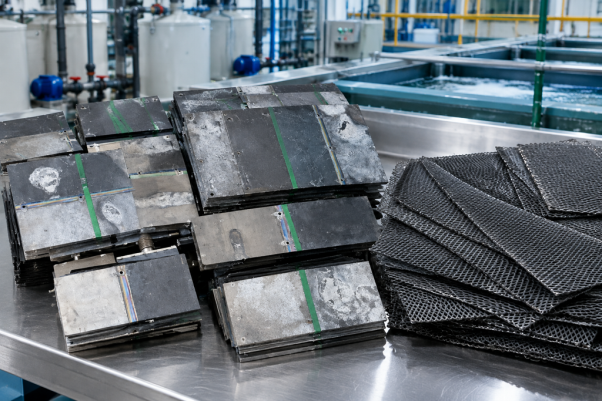
The value of MMO anode scrap is closely tied to the type and condition of its iridium or ruthenium coating. Service time and coating wear determine how much precious metal remains available for recovery. Scale, salt, steel attachments, and other residues add weight and processing work, so the material’s condition also affects its value. Clear lot separation, service records, and representative assay results provide a reliable basis for pricing and help determine the most suitable recovery route.
What MMO Anode Coatings Contain
An MMO anode typically consists of a titanium substrate with a catalytic metal oxide coating. Titanium provides mechanical strength and corrosion resistance, while the coating determines electrochemical performance. Iridium oxide is valued for its durability in demanding anodic service. Ruthenium oxide offers strong catalytic activity and conductivity in selected process environments. Commercial coatings may also contain mixed oxides, stabilizers, and oxides of other precious or valve metals. Because formulations vary, anodes with the same dimensions can contain very different amounts of recoverable metal.
For recyclers, the key issue is how much target metal remains recoverable after service, cleaning, handling, and refurbishment. Our titanium anode recycling work evaluates the titanium substrate, coating, attached process residues, and foreign metals as part of one recovery system. These materials are then separated and assessed for their commercial recovery value.
How Iridium and Ruthenium Coatings Differ
Iridium coated anodes attract attention because iridium is scarce and iridium oxide can maintain performance under harsh anodic conditions. Even after an electrode is electrically spent, its coating may still contain recoverable value. The amount depends on coating wear, so the remaining iridium may be lower than the original specification indicates.
Ruthenium coatings follow a different commercial pattern. Ruthenium can provide strong catalytic activity, but its recovery value depends on the formulation, service environment, and condition of the residue attached to the anode. These factors influence the most suitable recovery method.
We therefore evaluate iridium recycling and ruthenium recycling through related but distinct assessment paths. A mixed MMO lot may contain both metals, yet their distribution can vary widely. Lot segregation, coating history, and representative sampling help determine the actual precious metal content and protect the material’s value.
How Service History Affects Recoverable Metal Value
Service history directly affects the value of used titanium electrodes. Electrochemical operation can consume or dissolve part of the coating. Friction can wear down active material on edges, contact points, and high flow areas. Cleaning may remove deposits while further disturbing a weakened coating.
Salt, scale, organic film, and attached steel can increase an electrode’s gross weight without adding much recoverable metal. Repairs can also create uneven results when only part of the surface receives a new coating. As a result, two electrodes with the same design and weight may have very different values.
For example, two retired titanium anodes may each weigh 20 kilograms. Anode A has a documented iridium oxide coating, limited service history, and little attached scale. Anode B has operated for years in a contaminated process and shows heavy mineral deposits and visible coating loss on the active face. Although their gross weights are identical, Anode A may contain more recoverable metal and less low value residue. That is why we evaluate used titanium electrodes based on material identity, service history, and physical condition.
How Testing Supports Scrap Pricing
Visual inspection is useful for sorting, but it cannot establish a precise precious metal content. The commercial evaluation becomes stronger when the lot is weighed, photographed, segregated by type, and tested through representative sampling. Depending on the material and intended recovery route, testing may include XRF screening, laboratory assay, coating or residue analysis, and reconciliation against the shipment weight. The result should answer three questions: which target metals are present, at what approximate concentration, and how much of the lot is recoverable after processing.
A reliable assay gives buyers and sellers more confidence when the service history is incomplete. It may also show that a used material contains less metal than its original specification suggests. The assay helps define expected recovery, treatment cost, and settlement risk. This makes testing an important part of MMO anode scrap pricing because it connects the material’s chemistry with a realistic recovery estimate.
Shipment preparation also affects the quality of the evaluation. A clean, well segregated load makes it easier to compare similar materials and select representative samples. Mixed materials increase uncertainty and may require a higher processing allowance. Our industrial waste recycling experience is useful because anode scrap may arrive with production offcuts, spent catalyst residues, metal fixtures, or packaging materials. Clear material separation makes the test results more accurate and useful.
How Huatuo Evaluates MMO Anode Scrap
We follow a clear process when evaluating MMO anode scrap. We first identify the anode type and likely coating system through photos, and physical inspection. We then separate intact anodes, damaged pieces, coating scrap, and attached residues. Service history helps us assess coating loss and other wear. Representative sampling and testing provide an estimate of precious metal content and recovery potential. The final valuation considers metal value together with sorting, treatment, and refining costs.
Customers can begin by providing product photos, available test reports, material details, country of origin, industry, and approximate quantity. For suitable lots, we can arrange sampling or door-to-door collection. Our ICP testing generally takes 7–10 days. We accept MMO anode scrap in various forms, with a minimum lot size of 50 kilograms.
Our international projects show how this process works in practice. We handled a Turkey project involving 108 groups of titanium anode scrap with a reported total of about 12 tons. We also evaluated roughly 15 tons from Argentina and approximately 50 tons from Dubai. In Pakistan, we worked with titanium anode waste from an ion exchange membrane electrolyzer. These projects covered different material conditions, equipment types, and shipment sizes. They show why tonnage alone cannot determine value. Composition, coating condition, sampling results, and processing requirements all affect the final assessment.
Market and technology trends provide additional context. The USGS iridium statistics describe iridium’s role as a critical mineral. The U.S. Department of Energy’s information on electrolytic hydrogen production explains how electrochemical equipment supports hydrogen production. Together, these sources help explain why careful segregation and clear material records matter. The value of a spent electrode depends on the metal remaining in its coating and the recovery route available for that material.
How to Prepare MMO Anode Scrap for Shipment
A well-prepared shipment package helps the buyer review the lot faster and make a more reliable first offer. It should include:
- Material identity. State the anode type, substrate, coating system, and whether the lot contains iridium, ruthenium, or a mixed coating.
- Lot separation. Keep intact anodes, broken pieces, coating residues, fixtures, and unrelated industrial scrap in separate groups.
- Weight records. Provide gross and net weights when available. Include photos of pallets, crates, and representative pieces.
- Service history. Describe the process, years in service, cleaning history, refurbishment, and visible coating loss.
- Testing evidence. Include previous XRF or laboratory results. The sample location and related lot should remain clearly identified.
- Residue notes. Record any scale, salt, oil, organic film, steel attachments, or other material that may increase treatment costs.
- Shipping documents. Attach the packing list, photographs, lot numbers, and commercial invoice. These documents help the buyer match the shipment with the original evaluation.
Professional assay remains part of the final evaluation. Clear shipment records give the evaluator useful context for representative sampling and process planning. For large international shipments, complete documentation supports faster acceptance, smoother handling, and a more transparent final settlement.
FAQs
Can I receive a FOB Hong Kong quotation for MMO anode scrap?
Yes. We can prepare a FOB Hong Kong quotation based on the material details, test evidence, recoverable metal potential, and applicable international market prices. The final commercial terms are confirmed after reviewing the lot and agreeing on the purchase conditions.
Can a confidentiality agreement be signed before sharing MMO anode scrap information?
Yes. We can arrange a confidentiality agreement when the material review involves proprietary coating data, operating records, assay reports, or other commercially sensitive information. This allows the technical and commercial evaluation to proceed with clear information handling terms.
What payment method and settlement schedule are used for MMO anode scrap purchases?
We generally use T/T. A deposit is paid before shipment, and the balance is settled within 2–3 working days after the goods are received, subject to the agreed order terms and final verification.
Does Huatuo provide after-sales support after purchasing MMO anode scrap?
Yes. We provide follow-up support according to each order. We can assist with order document matching, receipt and testing progress, settlement status, and other after-sales matters agreed by both parties, keeping the purchase process traceable from collection through settlement.
Conclusion
The value of MMO anode scrap depends on the condition of its remaining coating and the quality of the material records. Iridium and ruthenium content, coating loss, attached deposits, lot consistency, and recovery requirements all affect the final result. We connect the physical anode, test evidence, and recycling route to build a practical assessment. This helps scrap owners make clearer decisions about collection, shipment, and settlement.
For a practical evaluation of titanium anode waste, coating residues, or mixed MMO scrap, contact us about MMO anode scrap recycling. Share the material type, estimated quantity, service history, photos, and available test data to support a faster review of the lot’s recovery potential.