
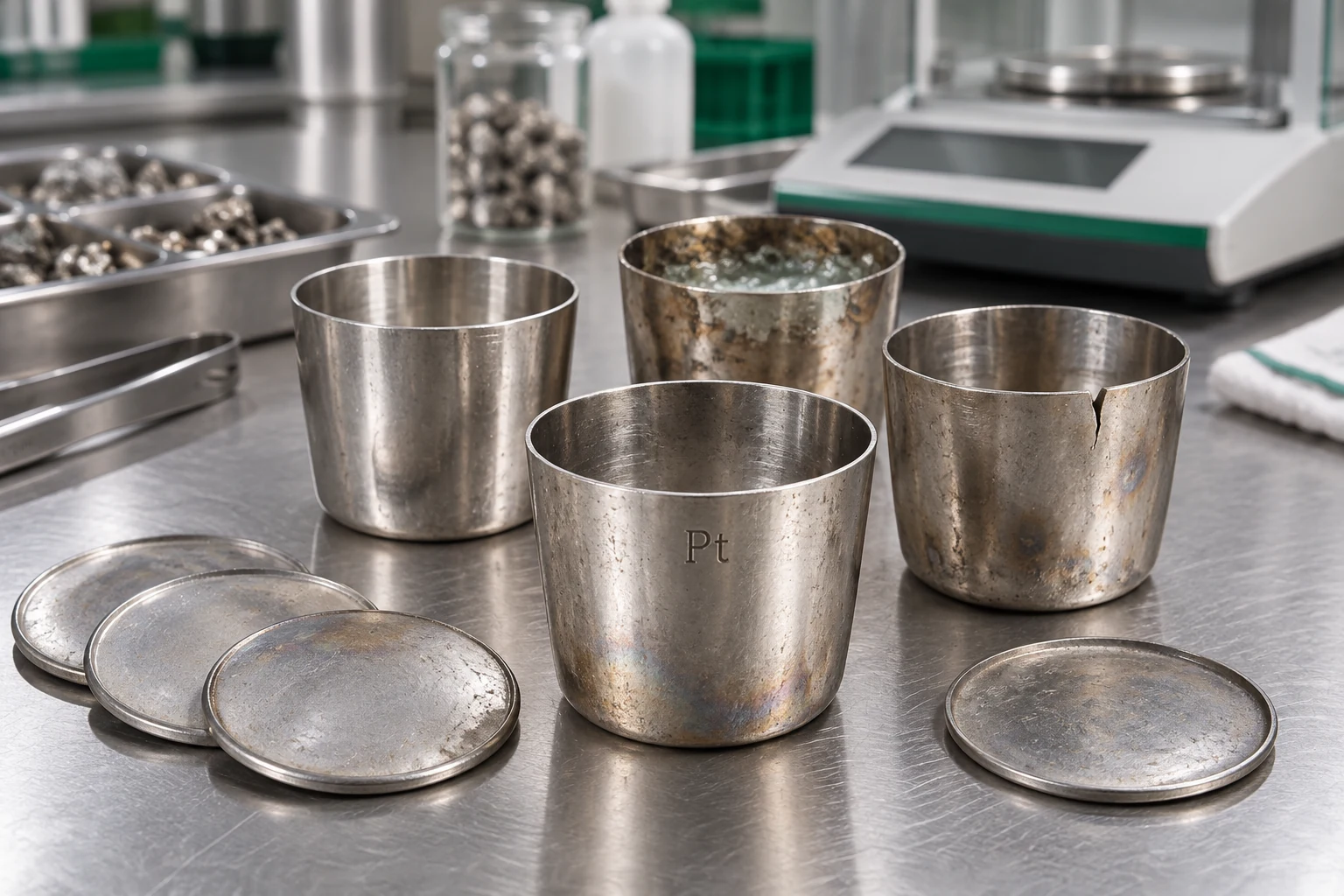
A cracked, deformed, or worn platinum crucible may still contain recoverable platinum and other valuable alloying metals. Its recycling value is assessed using five main factors: alloy grade, contamination, usage history, net scrap weight, and assay results. The net scrap weight is the measured weight of the accepted material, while the assay results determine the percentages of platinum and other valuable metals it contains. Final settlement is then calculated using the payable metal quantities confirmed by both parties and the agreed pricing terms. Reviewing these details helps us distinguish solid platinum labware from plated items, identify alloys such as Pt-Au and Pt-Rh, and determine how residues or attached components may affect sampling and processing.
We purchase spent platinum crucibles, platinum-rhodium wire, platinum sponge, platinum mesh, and other industrial platinum materials. For an initial assessment, please provide photos of the material and its markings, along with the quantity, weight, previous application, known chemicals or fluxes, location, and any available certificates or test results.
What Is Platinum Crucible Scrap and Why Is It Recyclable?
A platinum crucible is a laboratory or industrial vessel designed for high-temperature and chemically demanding applications. Its resistance to corrosion helps protect samples from contamination. Common uses include X-ray fluorescence sample preparation, ignition and gravimetric analysis, mineral testing, glass and crystal processing, and high-purity material research. Deformation, thinning, cracks, surface damage, or residue buildup may eventually make a crucible unsuitable for further use.
A retired crucible may still contain valuable platinum or platinum alloy. After deducting the packaging or container tare, we inspect the material’s condition and determine the accepted weight used for evaluation. Any residue, base-metal parts, or unrelated accessories are handled according to the method agreed for the lot. XRF is used mainly for preliminary material and alloy identification, while the final percentages of platinum and other valuable metals in the accepted material are determined by the assay method or other testing procedure agreed upon by both parties.
Our guide to spent platinum crucible sources covers materials from laboratories, high-purity material preparation, glass and crystal production, and precision manufacturing. We also list spent crucibles in our platinum scrap catalog. We assess each item by its material, alloy grade, condition, and usage history. Ceramic, nickel, zirconium, graphite, and platinum-plated crucibles follow different assessment and recycling processes.
Identify the Platinum Crucible Alloy Grade Before Recycling
The alloy grade is one of the first details we review. The term “platinum crucible” can refer to pure platinum or several platinum alloys. Markings, purchase invoices, manufacturer certificates, laboratory asset records, and equipment manuals may identify the material as Pt, Pt-Au, Pt-Rh, Pt-Ir, or a grain-stabilized grade. These records should be kept with the corresponding crucibles.
Common materials include pure platinum, high-purity platinum with small alloying additions, Pt-Rh, Pt-Au, and zirconia grain-stabilized platinum. Markings such as Pt-Au and Pt-Rh provide only an initial indication of composition; the actual alloy grade must be confirmed using manufacturer documentation or test results. Each verified grade has different properties. Pt-Au alloys provide non-wetting performance for fusion work, while Pt-Rh alloys offer greater strength and shape stability at high temperatures. Pure platinum is suitable for many laboratory applications that require chemical resistance.
Published research on platinum-alloy crucible performance compares pure Pt, Pt-Rh, Pt-Ir, Pt-Au, Pt-Pd, and stabilized platinum under ignition and fusion conditions. The results show that these materials have different mass-change characteristics. We therefore assess the alloy grade together with the crucible’s usage history. This helps us identify the metals present and understand how service conditions may have affected the material.
Common Alloy Inputs for a Recycling Assessment
|
Possible grade |
What the record may show |
Why it matters in recycling |
|---|---|---|
|
Pure Pt or high-purity Pt |
A “Pt” stamp, stated purity, or manufacturer certificate |
Indicates the nominal platinum grade; composition and material identity require verification. |
|
Pt-Au |
Pt95Au5, 95% Pt–5% Au, or a similar alloy designation |
Shows the expected platinum and gold content. This grade is commonly associated with fusion work. |
|
Pt-Rh |
Pt95Rh5, Pt90Rh10, or another stated Pt-Rh ratio |
Identifies the expected rhodium percentage and supports the correct assay and valuation method. |
|
Pt-Ir |
A certificate, grade marking, or test result that explicitly states the iridium content |
Confirms iridium as part of the alloy and supports selection of the appropriate assay and valuation method. |
|
Manufacturer-designated stabilized platinum grade |
The manufacturer’s grade, alloy composition, and original application |
Manufacturer records help confirm the platinum matrix, stabilization method, and nominal composition. |
|
Unknown or plated item |
No clear grade marking, exposed base metal, uneven surface color, or an unusual weight |
Additional testing can determine whether the item is solid platinum alloy, plated metal, or another material. |
Document Contamination and the Crucible’s Usage History
Used crucibles may contain flux, glass, oxides, minerals, metals, carbon, salts, or other process residues. These materials can appear as films, beads, scale, discoloration, or deposits attached to the crucible wall. Some residues remain after cleaning and may be difficult to see. We review contamination because it can affect the accepted weight, handling requirements, sampling method, and processing route.
A clear usage history helps us understand the condition of the material. Useful details include the substances held in the crucible, fluxes or chemicals used, operating temperature, number of cycles, cleaning method, and reason for retirement. Lithium borate fusion, glass melting, ash determination, metal melting, and crystal growth produce different residue profiles. Exposure to lead, silicon, sodium, niobium, chlorides, sulfur compounds, or base metals may also affect processing.
Separate storage helps preserve the identity of each material group. Matching lids may remain with crucibles of the same grade and usage history. Their weights should be recorded separately when possible. Tongs, ceramic supports, furnace debris, sample beads, and unidentified vessels should be listed as separate items. This allows us to match each certificate or assay report to the correct material.
An SDS or process note should accompany residues that may be hazardous or regulated. We recommend providing clear photographs and an accurate description before cleaning the material. Aggressive cleaning may remove platinum, spread contamination, or make the original residue harder to identify.
Confirm Scrap Weight, Form, and Available Assay Data
The recorded weight should clearly represent the metal lot. Useful figures include the number of crucibles and lids, gross packed weight, container tare, and net scrap weight. Individual weights help us identify unusual items in a small laboratory lot. For larger batches, a container-level inventory allows us to compare markings, condition, and supporting records.
The physical form also affects the assessment. Each item should be described as intact, flattened, cut, cracked, or coated with residue. Marked crucibles are best kept in their original form because the stamp and shape can support identification. Dishes, molds, electrodes, thermocouple wire, sweep material, and other platinum labware should be listed as separate material groups.
Supporting data may include manufacturer certificates, alloy specifications, previous XRF results, laboratory assay reports, purchase records, or internal asset registers. XRF screening can help identify alloys on exposed metal surfaces. Residue, curved surfaces, thin walls, plating, and uneven contamination may affect the reading. Each handheld XRF result should therefore identify the tested item and exact test location. XRF results are used for preliminary screening only and do not replace the final assay or settlement method agreed upon by both parties.
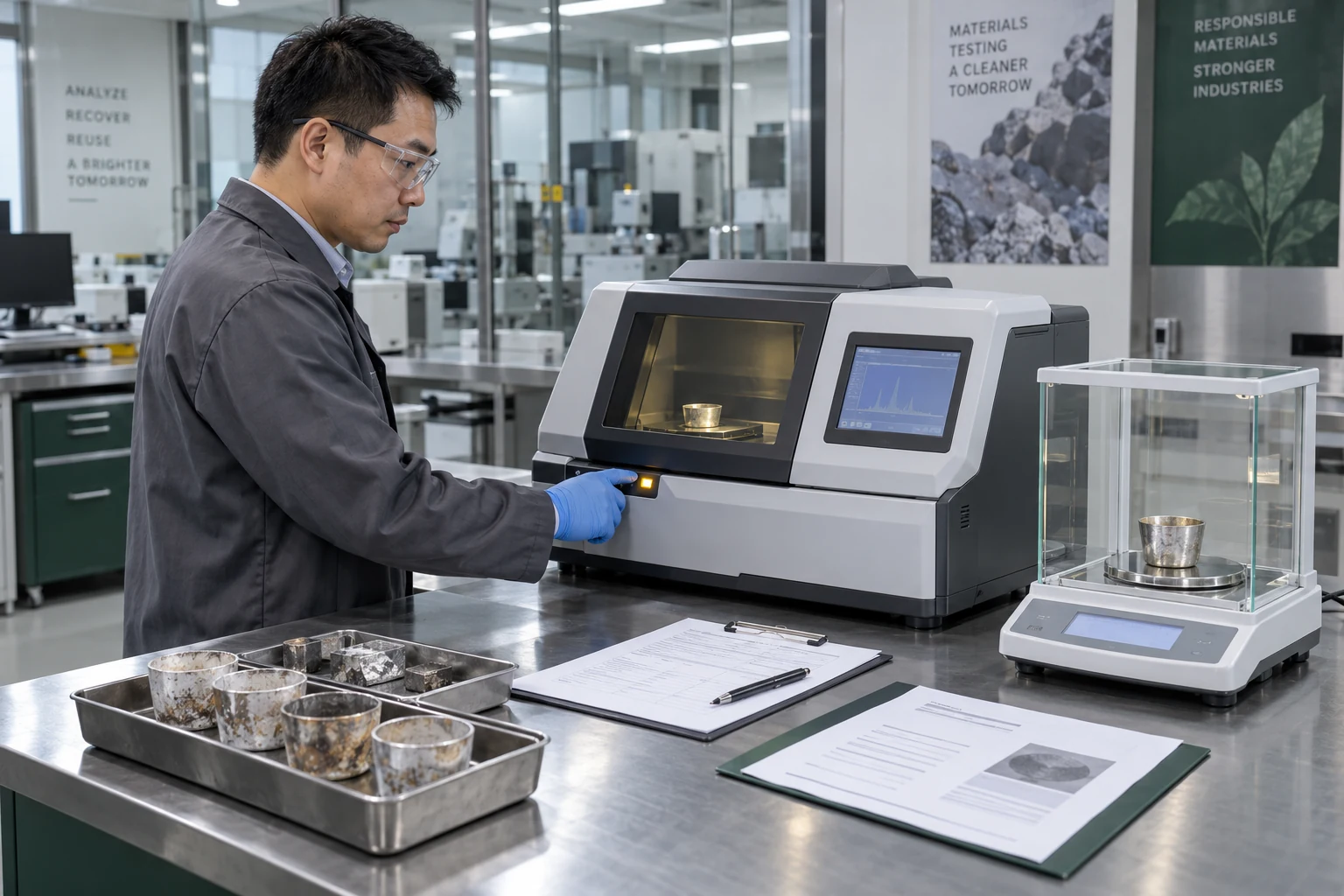
Our PGM recycling process includes sorting materials by type and composition, followed by XRF analysis for preliminary identification. We select the assessment method according to the condition and consistency of each lot. A documented group of uniform solid crucibles may require a simpler evaluation than mixed fragments with heavy residue. Before final settlement, we confirm the test basis, accepted weight, payable metals, and any representative sampling requirements.
Assessment Information Checklist
-
Crucible alloy marking or expected grade
-
Number of crucibles and matching lids
-
Individual or lot net weight, with packaging excluded
-
Current form and condition, including cracks, thinning, cuts, or deformation
-
Former application, sample type, fluxes, chemicals, and temperature history
-
Visible or suspected contamination and any SDS
-
Clear photographs of the full lot, markings, interior, exterior, and residue
-
Available XRF readings, assay reports, or previous composition data
-
Storage location, packaging method, and expected shipment timing
How We Assess a Platinum Crucible Lot
The evaluation compares the submitted records with the physical material. Alloy markings, certificates, weight lists, photographs, and usage history show whether a lot is consistent. They also help determine the need for sorting, sampling, or further testing. XRF provides an initial indication of the alloy composition. The material’s form, condition, and contamination then guide the assessment method.
Consider a batch of intact crucibles with the same Pt-Au markings and similar usage histories. If the item count, weight records, photos, and test results are consistent, we may assess the batch as one group. If some items have different or unclear markings, heavy residue, or inconsistent test results, we separate and review them individually. When the available information is not enough to confirm their composition, we conduct additional testing.
Several issues can delay a quotation:
-
Mixed alloy grades or material groups
-
Gross weight that includes packaging or residue
-
Photographs that do not clearly show markings and material condition
-
Missing information about previous applications or hazardous residues
-
Assay results that cannot be matched to specific items
-
Accessories or non-platinum materials included in the lot
The completed review establishes three points for the quotation:
-
Which weight will be used: the accepted net weight after tare and agreed exclusions.
-
How the material will be tested: preliminary XRF screening, representative sampling, laboratory assay, or another agreed method.
-
What the quotation will include: payable metals, pricing basis, applicable charges, and logistics scope.
The result may be a direct quotation, a request for additional information, or a recommendation for further testing. Both parties can then confirm the assessment basis before shipment.
Request a Platinum Crucible Recycling Assessment
Use the Assessment Information Checklist above to prepare your lot summary. Keep different alloy grades or usage histories clearly separated, then submit the completed information for review.
To request a platinum crucible recycling assessment, send your completed lot summary through our contact page. After reviewing the submission, we will confirm whether the lot is ready for quotation or whether additional information, testing, sampling, or shipping arrangements are required.
FAQ
Is there a minimum quantity for platinum crucible recycling?
We review platinum crucible enquiries case by case. Send the quantity and location so we can confirm whether the lot is suitable for assessment. Our customers include laboratories, industrial companies, scrap dealers, and individual sellers. We review the quantity, alloy grade, condition, metal content, and location of each lot.
How long does platinum crucible recycling and settlement take?
The timeline depends on the lot size, material condition, alloy composition, testing requirements, and location. Uniform crucibles with clear records are usually easier to assess. Mixed or contaminated lots may need additional inspection. We confirm the inspection, quotation, transportation, and settlement schedule with the seller in advance.
How are any applicable charges handled?
We do not apply hidden charges for collection, transportation, or processing. Depending on the specific lot, charges may apply for additional testing or analysis, representative sampling, special handling, the required processing route, or logistics outside the agreed service scope. Any applicable charges should be itemized in the quotation or contract, together with the payable metals and pricing basis, and confirmed by both parties before shipment.
How should platinum crucible scrap be packaged for shipping?
Different alloys and material groups should be packed separately. Each package should have a clear label showing the material type and weight. Secure containers help prevent loss or damage during transportation. The shipment should include the lot description, item count, weight, markings, and residue details. Provide any available certificates or test results, plus safety documents required for the material or transport method.